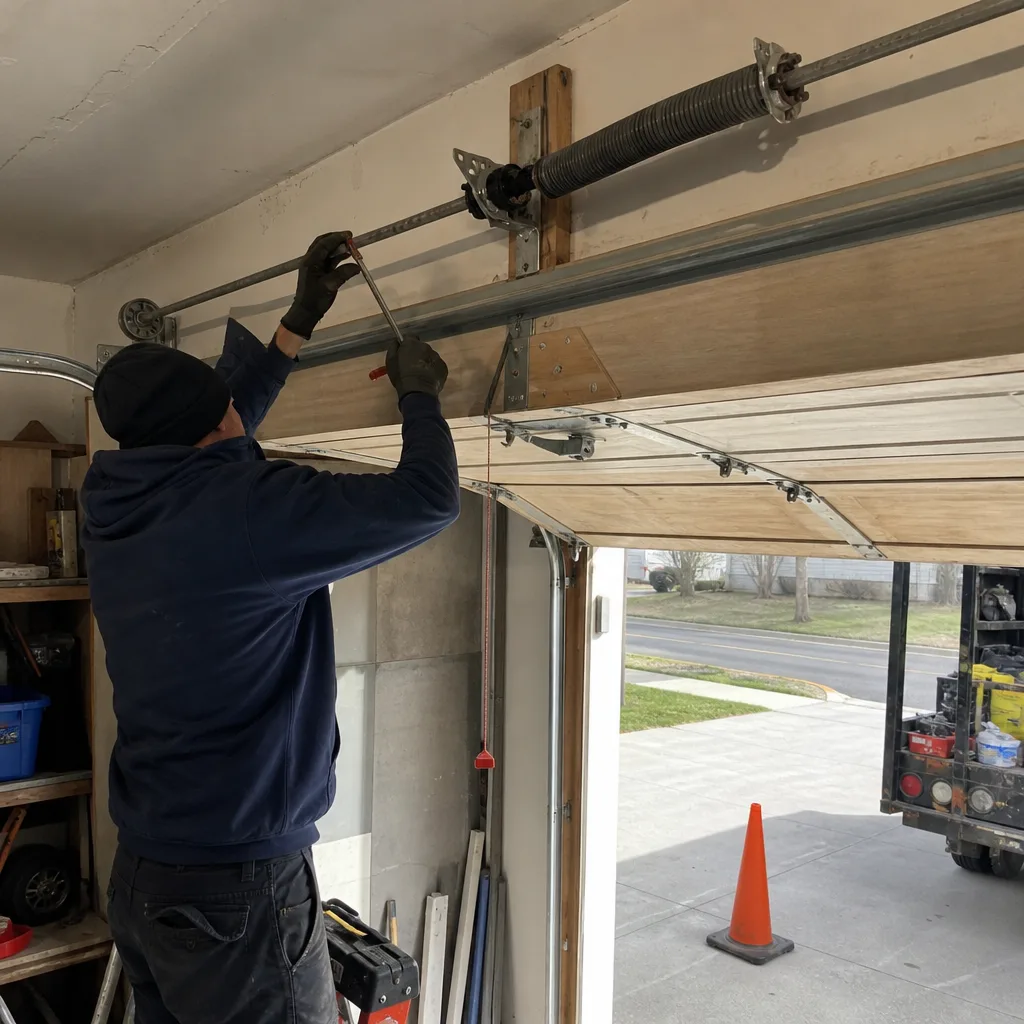
Last updated November 21, 2026
 Raised-panel steel
 Carriage house
 Modern flush
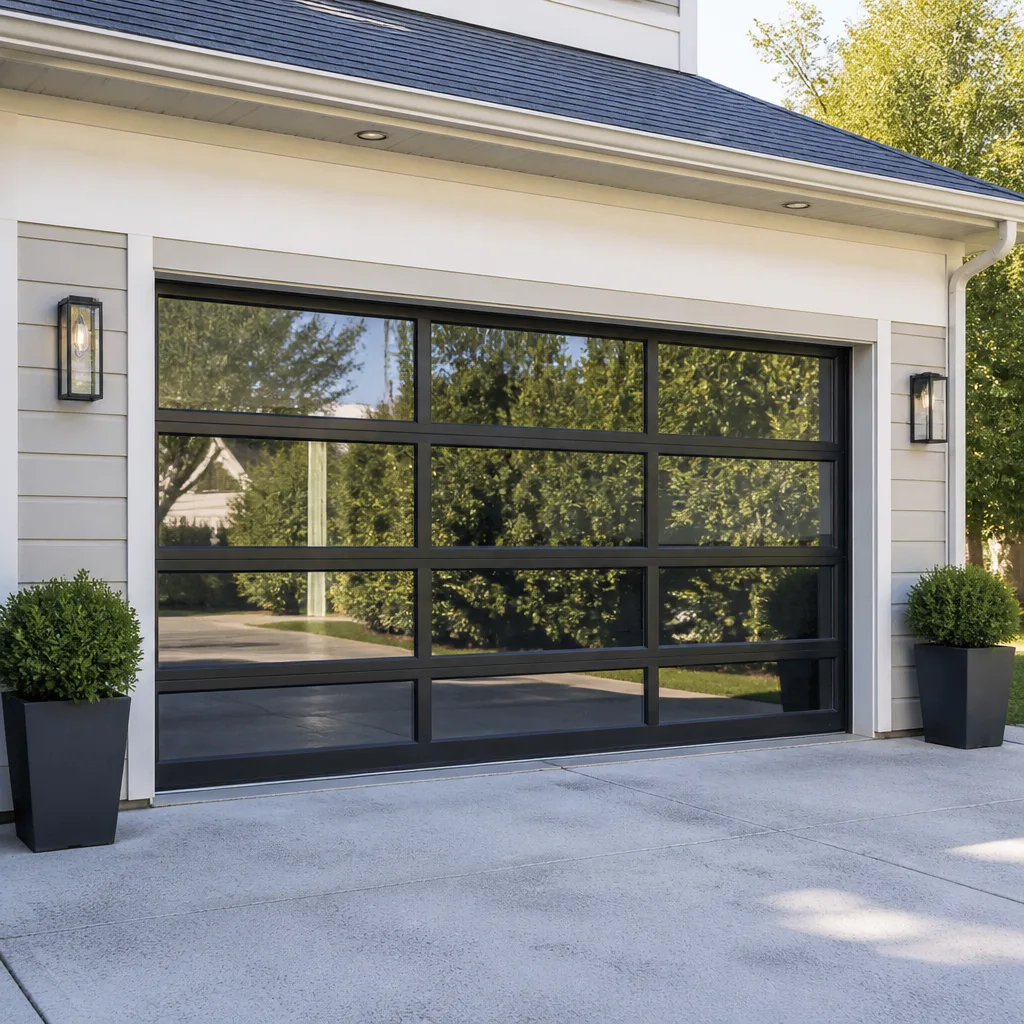 Full-view glass
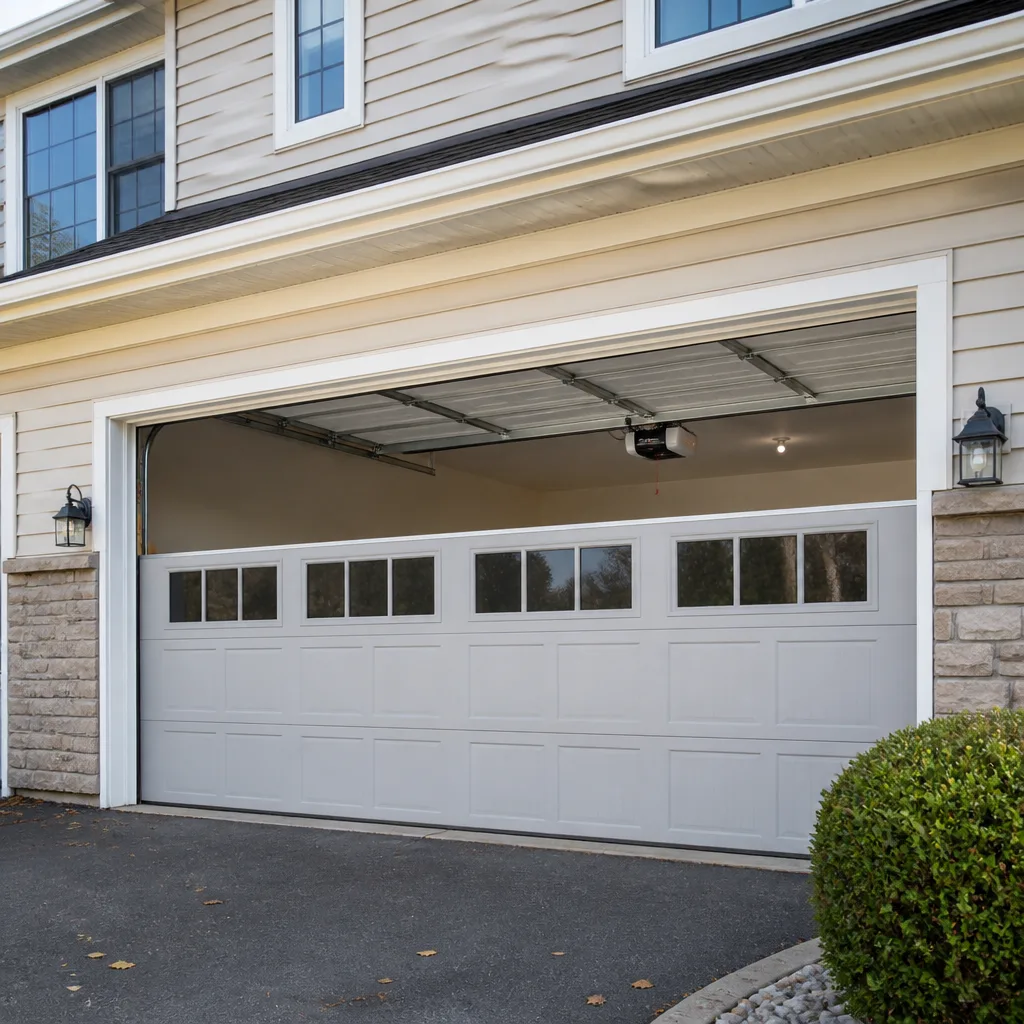 LiftMaster openers
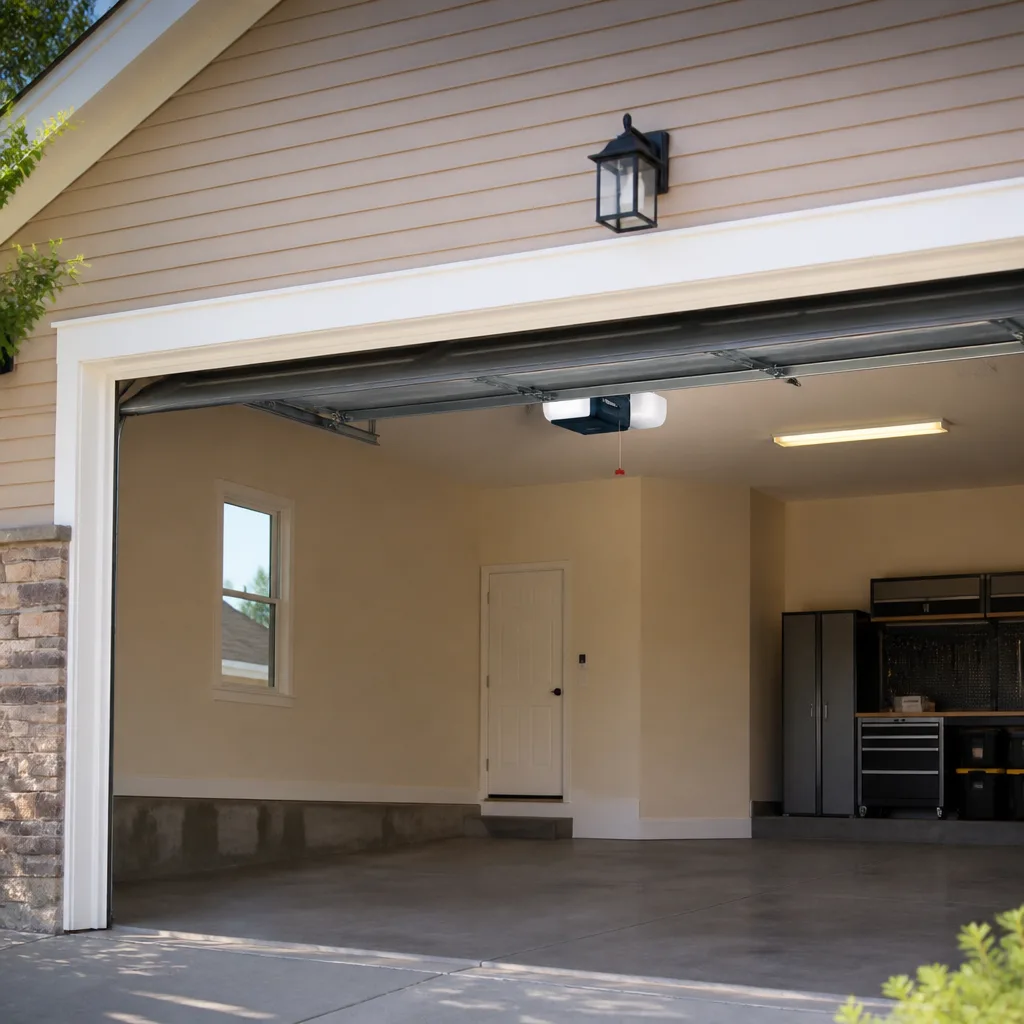 Chamberlain openers
Full 25-point door and opener safety check with every visit - springs, cables, rollers, tracks, and your LiftMaster or Chamberlain opener included
You get a price before we start. It does not change when the pro arrives.
Get your free estimateGarage Door Warning Signs: A Tremont Homeowner’s Reference Guide
A grinding noise during the last six inches of closing isn’t a quirk. It’s a roller that’s about to seize in the track, and the next part to fail is often the cable that compensates for it. That’s the thing about garage doors: they almost never break without a warning. They tell you first, in sound, speed, and movement. Most homeowners dismiss those signals as normal quirks until the door stops dead. This guide translates each warning sign into the mechanical problem behind it, so you know what you’re hearing and how fast to act. We’ll cover sounds, movement, what you can see from the floor, and opener behavior. Everything is written for Tremont homes dealing with real seasons and real wear.
Styles & brands we work with
- Raised-panel steel
- Carriage house
- Modern flush
- Full-view glass
- LiftMaster openers
- Chamberlain openers
Quick Answer
If your Tremont garage door grinds, squeals, pops, hesitates at the same spot, reverses on its own, or needs several remote presses, it’s reporting a specific problem – usually worn rollers, a failing spring, a stretched cable, or a misaligned sensor. Grinding and popping are the signs that most often call for a same-day repair; squealing and slow track wear can usually wait for a scheduled visit. When in doubt about a spring or cable, stop using the door and get it looked at.
Table of Contents
- Why Garage Doors Give Warnings Before They Fail
- What Each Sound Means: A Translation Table
- The Door’s Speed and Movement Tell You a Lot
- What You Can See From the Floor (No Tools Needed)
- Opener Behavior Signals You Shouldn’t Ignore
- Urgency Tiers: What Can Wait and What Can’t
- Tremont Seasons and Garage Door Wear
- Common Mistakes to Avoid
- When to Call a Professional
Why Garage Doors Give Warnings Before They Fail
A garage door is a balancing act. Springs hold most of the door’s weight so the opener only has to nudge it along the track. That balance depends on every roller, hinge, cable, and spring doing its part. When one part starts to wear, the others take on its load, and that shift shows up as sound or movement long before the door gives out.
In Tremont, that wear happens faster in some households than others. A door that opens and closes several times a day wears its rollers and hinges at a different pace than one that moves twice a day. The gaps between seasons matter too: the temperature swings we get push metal to contract and expand, which stresses springs and cables at the points where they’re under tension.
Here’s why paying attention pays off:
- A worn roller is cheap to replace. A seized roller can damage the track and the cable before you know it.
- A spring with a growing gap is a spring that’s about to let go. Replacing it on your schedule beats replacing it in the cold with your car stuck inside.
- A strained opener that fights a binding door wears out fast. The opener is usually the expensive part, so protecting it makes sense.
Catching a warning at the right stage keeps a small repair from becoming a bigger bill. That’s the whole reason to learn the signals in this guide. If you’re already past the warning stage and into a genuine failure, our guide to garage door repair walks through what a fix involves.
What Each Sound Means: A Translation Table
The single best free diagnostic you have is your ears. A door that’s running right is quiet – a low, steady hum from the opener, a soft roll from the wheels. Anything else is information. The trick is matching the sound to the part.
Here’s how we translate the four sounds Tremont homeowners describe most often:
| Sound | Where it’s coming from | What it usually means | Urgency |
|---|---|---|---|
| Grinding | At the track, often near the end of closing | A roller seizing in the track or a bent hinge tracking wrong. The cable is the next part to fail. | Same-day call |
| Squealing | Along the track or at the hinges | Dry, worn rollers or metal-on-metal friction. Early wear, easy to fix. | Scheduled visit |
| Popping | Head of the door, once per cycle | A spring that’s caught and released, or a loose torsion tube. Can precede a spring break. | Same-day call |
| Rattling | Panels, hinges, tracks | Loose fasteners, worn hinge bushings, or a door that’s torquing as it moves. | Scheduled visit, sooner if it’s getting worse |
A sound that repeats at the same spot in the door’s travel is more telling than a sound that shows up randomly. That same-spot repetition means one part is binding or releasing, and it’s the same part every time. Note where the door is when it makes the noise – six inches from closed, halfway up, all the way at the top. That one detail will save a technician time and get you a straight answer faster.
Never stick your hand or tools up near the springs or the cables to investigate a sound yourself. High-tension parts can fail without warning, and the energy stored in a wound torsion spring is enough to cause serious injury. This is the one spot in a garage that isn’t a DIY area.
The Door’s Speed and Movement Tell You a Lot
Watch your door open and close once, all the way through, on a day you’re not in a hurry. You’re looking for one thing: consistency. A healthy door moves at the same pace and in the same line every time. A door that hesitates, jerks, or looks crooked is telling you it’s out of balance.
Here are the movement signs and what they point to:
- Hesitation at the same point. The door slows or stutters at the same spot on the way up or down. Reading it: a part is binding – often a bad roller, a bent track, or a hinge that’s shifted. The strain moves to the cable and the opener.
- Jerking or stuttering throughout. If the whole motion feels rough, the balance is usually off. Torsion or extension springs that have lost tension cause this, and it usually gets worse in cold weather.
- One side moving faster than the other. The door rises or falls crooked. That’s a track or cable issue, and the door can come off its tracks if it’s left alone. Stop using the door and call.
- Dropping fast on closing. A door that slams into the last few inches instead of easing down is usually a spring that isn’t holding its share of the weight. That’s a same-day issue before it snaps.
One quick check you can do safely: lift the door by hand just a few inches when it’s fully closed, then let go. If the door feels heavy and doesn’t hold its position, the spring is the likely culprit. If it won’t hold or wants to drop, stop testing – that’s a sign for a professional to look at, not something to keep working.
Slow, crooked travel is worth a call sooner than you’d think. When the door is running unevenly, the cables are taking on uneven load, and that’s how a repair turns into a bigger repair.
What You Can See From the Floor (No Tools Needed)
You don’t need a toolbox to catch most of these problems. A two-minute walk-around, standing on the floor with the door closed and then just starting to open, tells you plenty. Look at three things: cables, springs, and rollers.
Cables. The cables run down each side of the door between the hinges and the bottom corner. Healthy cable is smooth and tightly wound. Here’s what to look for:
- Fraying, kinks, or a bird’s-nest look. Any break in the braid means the cable is weakening. This is a same-day call.
- Cable slack on one side. It’s not under load the way it should be. That usually points to a spring or drum problem.
- Rust or discoloration at the drum. Wear in one spot, not a reason for alarm, but worth a look when the door is serviced.
Springs. On a torsion setup, the spring is the horizontal coil above the door. On an extension setup, the springs sit above each side track. What you’re looking for:
- A visible gap in the spring coil. A torsion spring that’s broken usually shows a clean split in the coil. A gap is a broken spring – stop using the door.
- A stretched, angled, or sagging extension spring. A sign it’s losing its pull.
- Visible rust along the coil. Doesn’t break it by itself, but combined with age it’s a warning worth flagging at your next service.
Rollers. The rollers ride in the tracks at each hinge. From the floor you can usually see them. Look for flattened or cracked wheels, or a roller that’s sitting crooked in the track. A single worn roller will sound like the whole door is failing. It usually isn’t.
If you spot a broken spring or a frayed cable, call first and stop opening the door. High-tension parts and electricity aren’t where you want to improvise, and a technician with the right tools will handle both safely. If you need a fresh set of hardware entirely, our page on garage door installation covers what replacement involves in Tremont.
Opener Behavior Signals You Shouldn’t Ignore
A door’s opener is often blamed for problems that aren’t the opener’s fault. It’s the last thing in the chain, so it takes the blame when a worn spring or binding track makes it work harder. But the opener has its own warning signs, and they’re worth knowing so you don’t replace the wrong part.
Here’s what each opener behavior points to:
- The door reverses without hitting anything. Usually the safety sensor, or a mechanical binding the opener is fighting. The opener reads the resistance as an obstruction and backs off.
- You need multiple remote presses. A weak remote battery comes first, but a fading wall unit or a worn opener logic board follows close behind. Worth checking the battery, then the opener itself.
- The door opens but won’t close, or the reverse happens on its own. Misaligned or dirty sensors are the most common cause. This is one of the few garage door problems you can check yourself: wipe the sensor lenses and make sure they’re aimed at each other.
- The opener runs but the door doesn’t move. The opener is disconnected from the door. Check the manual release cord first, then suspect a stripped gear or a broken spring taking the door’s weight.
Opener electronics also age. If your opener is running LiftMaster, Chamberlain, Genie, or a smart Wi-Fi-enabled unit, the app-connected features can show you a fault code that points straight to the problem. If the door itself is fine but the opener is acting up, our garage door opener repair page covers what a repair usually entails.
One preventive point: the opener should never be strong-arming a door that’s out of balance. If the door has to be pushed to open or close, the opener is masking a mechanical problem and wearing itself out at the same time. Fix the door first and the opener stops struggling.
Urgency Tiers: What Can Wait and What Can’t
Not every warning sign is a five-alarm fire. Some allow a scheduled visit in a few days; some mean the door shouldn’t be used at all until a technician sees it. Here’s how we sort Tremont calls into tiers.
Tier 1 – Same-day call (stop using the door):
- A broken spring or a visible gap in the coil
- A frayed, kinked, or slack cable
- The door is crooked, off its tracks, or stuck partway
- Loud popping or grinding at the same spot every cycle
- The door slams on the last few inches of closing
Tier 2 – Scheduled visit this week:
- Grinding or squealing that happens throughout the cycle but doesn’t get worse
- The door hesitates at the same point but still closes
- A remote that needs two or three presses
- A door that reverses now and then without an obstruction
- Rattling from hinges or panels
Tier 3 – Book at your next service:
- A minor squeak on a dry hinge
- A single roller that looks slightly worn
- Surface rust on a hinge or track
If you’re not sure which tier you’re in, call and describe what you’re hearing or seeing. We can tell you whether it’s safe to keep opening – and if it isn’t, you’ll know before you risk breaking the door.
Tremont Seasons and Garage Door Wear
The climate here gives garage doors a workout. Freezing nights and warm afternoons swing metal back and forth, and that expands and contracts the springs, tracks, and hinges. The door that sounds fine in the fall can start grinding in January. That’s the seasonal pattern we see in Tremont.
Here’s how seasons tend to show up:
- Cold snaps. Springs get brittle and hold tension differently. A spring that’s been at the edge all fall is more likely to break when the temperature drops overnight.
- Freeze-thaw cycles. Moisture in tracks and around hinges freezes, expands, and adds friction. Doors that were quiet get loud.
- Summer heat. Metal parts expand and clearances change. Cables that are only a little loose can start rubbing.
- Spring storms. Wind-driven debris around the opening can knock a track out of alignment or jam a roller.
That seasonality doesn’t mean you should panic every fall. It means a ten-minute check a couple of times a year pays for itself in caught wear. For Tremont households with a door that’s already noisy, the coldest stretch of the year is the wrong time to wait for a repair. Book it before the snap, not during it.
This is also why a good tune-up is worth doing ahead of the seasons, not after something breaks. It’s the same reason we offer inspection alongside repair – the point of a check is to find wear while it’s still cheap to fix.
Common Mistakes to Avoid
- Treating noise as normal. A garage door that’s been squeaking for months isn’t “just how it sounds.” It’s telling you a roller or hinge is dry and wearing. The longer you wait, the more parts get dragged into the repair.
- Blaming the opener first. When a door won’t close, it’s tempting to call it an opener problem. Most of the time, the opener is reacting to something mechanical – a binding track or a spring that’s lost tension. Diagnose the door before you touch the opener.
- Adjusting the springs yourself. High-tension springs and the cables attached to them store enough energy to cause serious injury if they let go. That’s the single most common DIY mistake we get asked to help clean up. Leave it to someone trained on the tension side.
- Lubing the tracks. Tracks are meant to be clean and dry, not greasy. Lubricating the inside of the track attracts dust and grit and causes stuttering. The hinges and rollers get a light lubricant; the track itself doesn’t.
- Ignoring one side moving faster than the other. It’s easy to dismiss because the door still opens. A crooked door is loading one cable more than the other, which is how a repair becomes a much bigger one.
- Waiting until winter. If your door has a warning sign in the fall, get it checked before the cold. Freezing temperatures are when a weakening spring is most likely to give out, and that leaves your car stuck at the worst time.
- Replacing a door when it needs a repair. A grinding door or a fading opener often gets described as needing a new door. Usually it needs a specific repair – spring, roller, cable, or opener part – that’s much more affordable than replacing the whole system.
When to Call a Professional
Call us if any of these is true: a spring is broken or shows a gap, a cable is frayed or slack, your door is crooked or stuck partway, the door moves fast and slams into the close, or you hear grinding or popping that repeats at the same spot. If you’ve had a door reversing on its own for a week, or a remote that needs three presses, book a visit before the door fails entirely.
Our technicians have up to 12 years of experience with the parts and openers that fail most often, and we work on the major brands, including LiftMaster, Chamberlain, Genie, and Clopay. We find the actual cause, not just the symptom. Before we touch a thing, you get a clear picture of what’s wrong and what it costs – no surprises after the fact. Garage Door Repair Tremont offers free estimates in Tremont – call (855) 337-1175.
Frequently Asked Questions
Grinding during the last few inches of closing is the most common one. It usually means a roller is seizing in the track, and if it’s left alone, the cable that carries the strain is often the next part to fail. Call before that happens. Call (855) 337-1175 for an exact quote – estimates are free.
No. High-tension springs and the cables attached to them store enough energy to cause serious injury, and that’s not a repair to learn on your own door. Leave spring work to trained technicians. Call (855) 337-1175 and we’ll tell you whether the door is safe to use in the meantime.
Grinding that repeats at the same spot on every cycle is a same-day call. It points to a binding roller or track that’s loading the cable. A grinding sound that crops up only now and then is worth a scheduled visit this week. Either way, call (855) 337-1175 and describe the sound.
Usually yes – a dirty or misaligned safety sensor is the most common cause of a door reversing without an obstruction. It can also be a mechanical bind the opener reads as a block. Wiping the sensor lenses is a good first check. If the reverse keeps happening, call (855) 337-1175 and we’ll diagnose the cause.
A door moving crooked is usually a track or cable problem, and one cable is carrying more load than the other. That’s a same-day issue because the door can come off its tracks. Stop using the door and call (855) 337-1175.
We work on the brands that fail most often, including LiftMaster, Chamberlain, Genie, and smart Wi-Fi-enabled units. If your opener is a model we don’t carry parts for, we can tell you on the call. Call (855) 337-1175 for a free estimate.
The Bottom Line
A garage door rarely fails without warning. A grinding roller, a hesitating door, a frayed cable, or a remote that needs three presses is the door telling you what’s about to break. Catch it early and you’re looking at a rollout of small repairs; ignore it and the same door can take out the track, the cable, and the opener in one go. If you’re in Tremont and something about your door feels off, trust the sound. We’ll find the actual cause, not just the symptom, and give you a clear price before any work starts. Call (855) 337-1175 for a free estimate.
If you’re not sure where to start, our main Garage Door Repair Tremont page covers the full range of what we handle for homes across Tremont.
Written by the team at Garage Door Repair Tremont.
See the difference
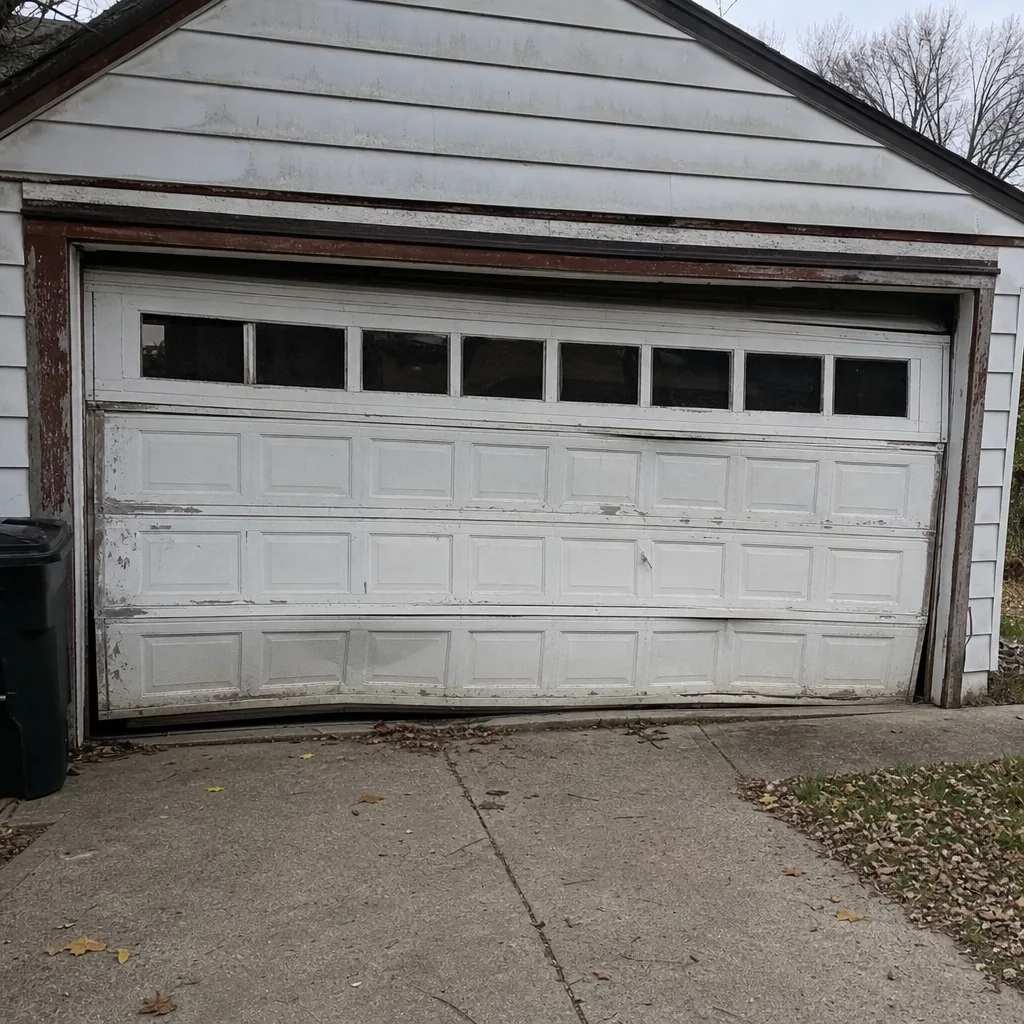 Before
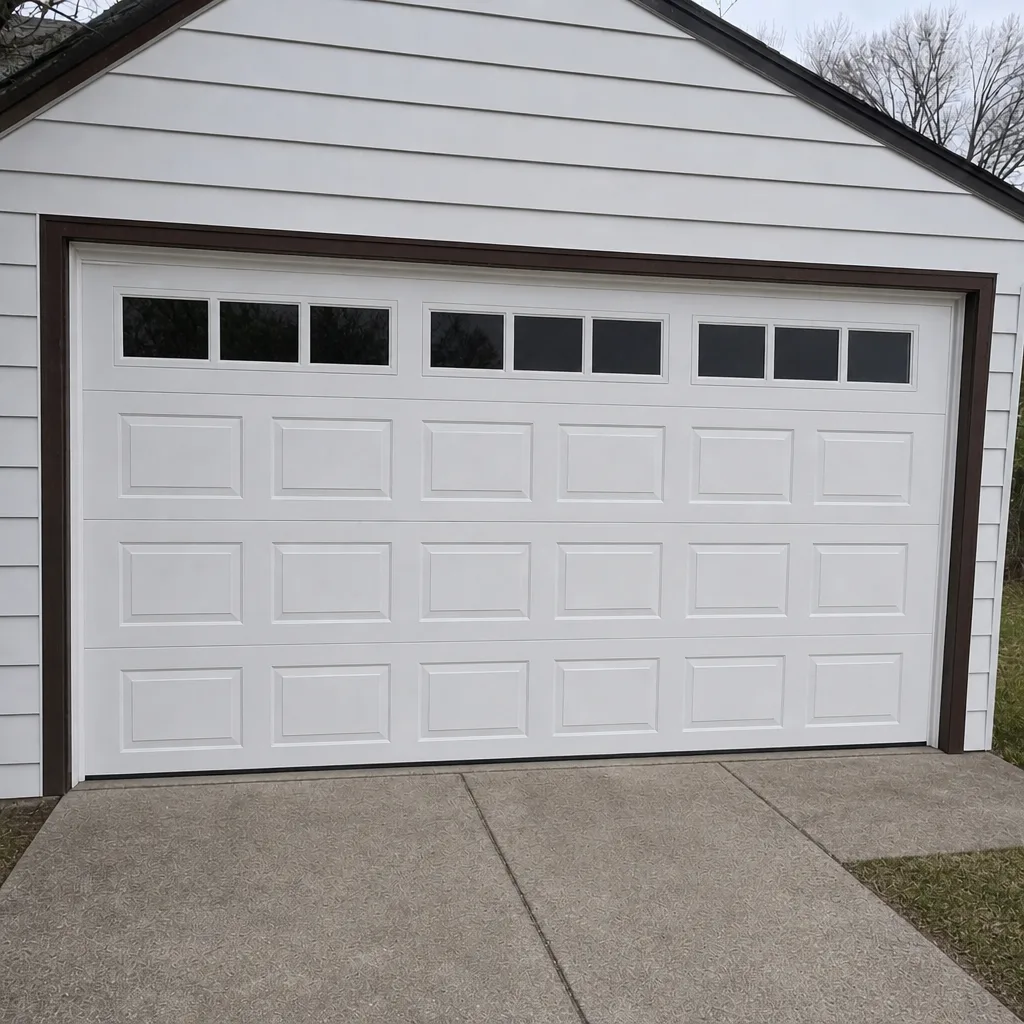 After
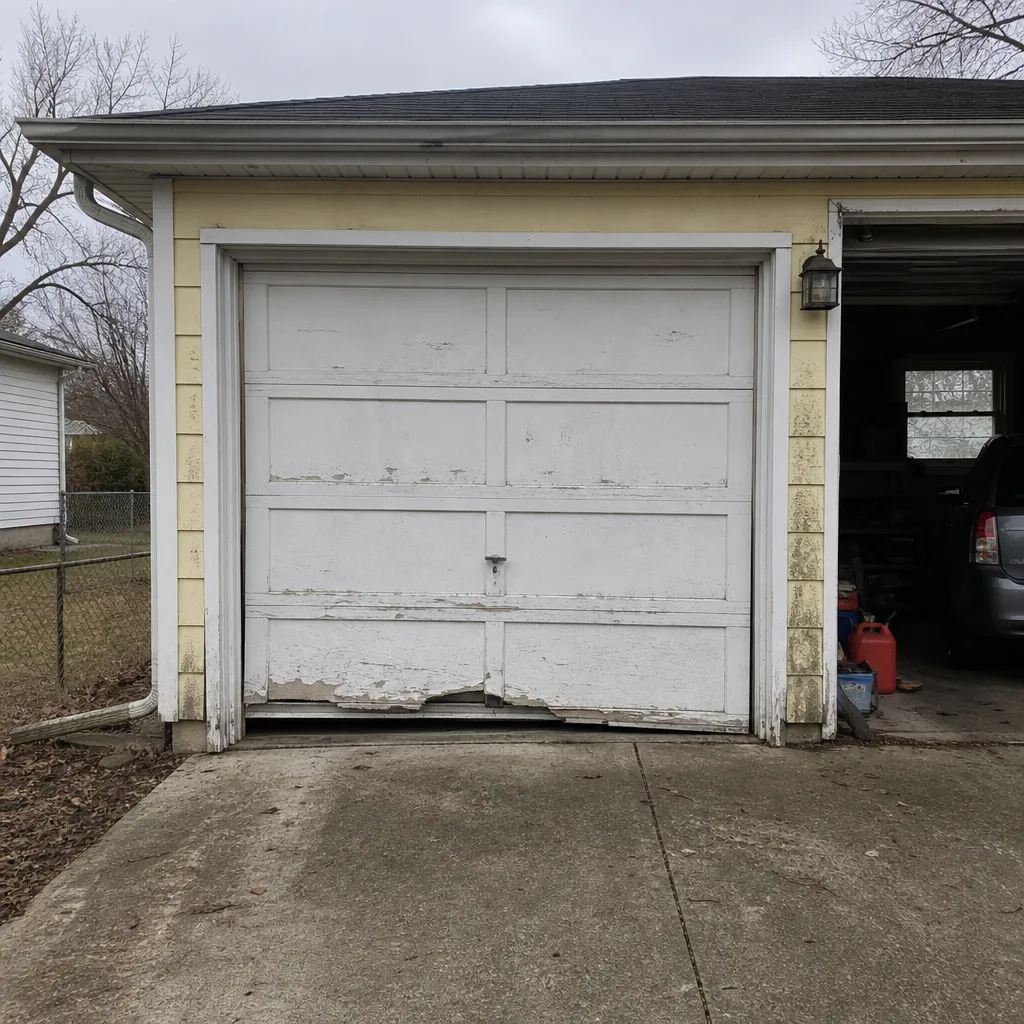 Before
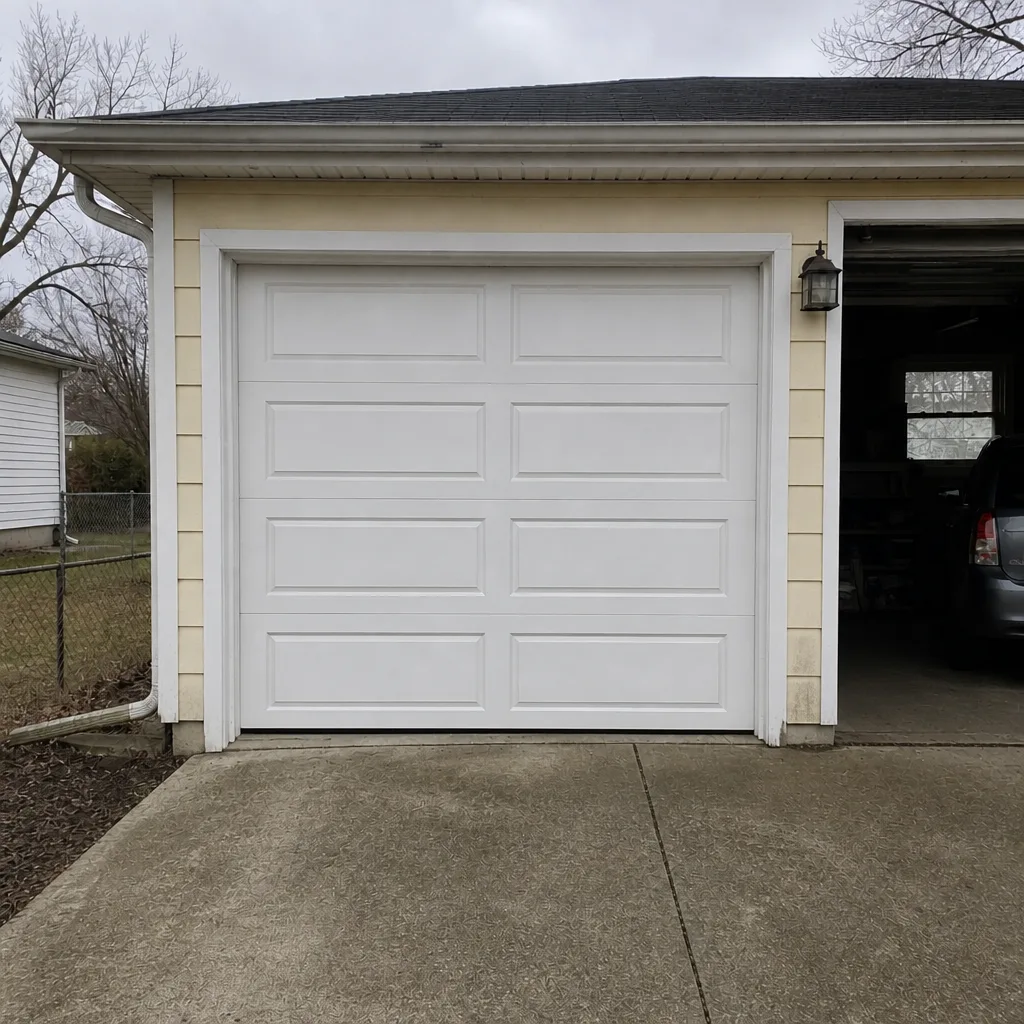 After
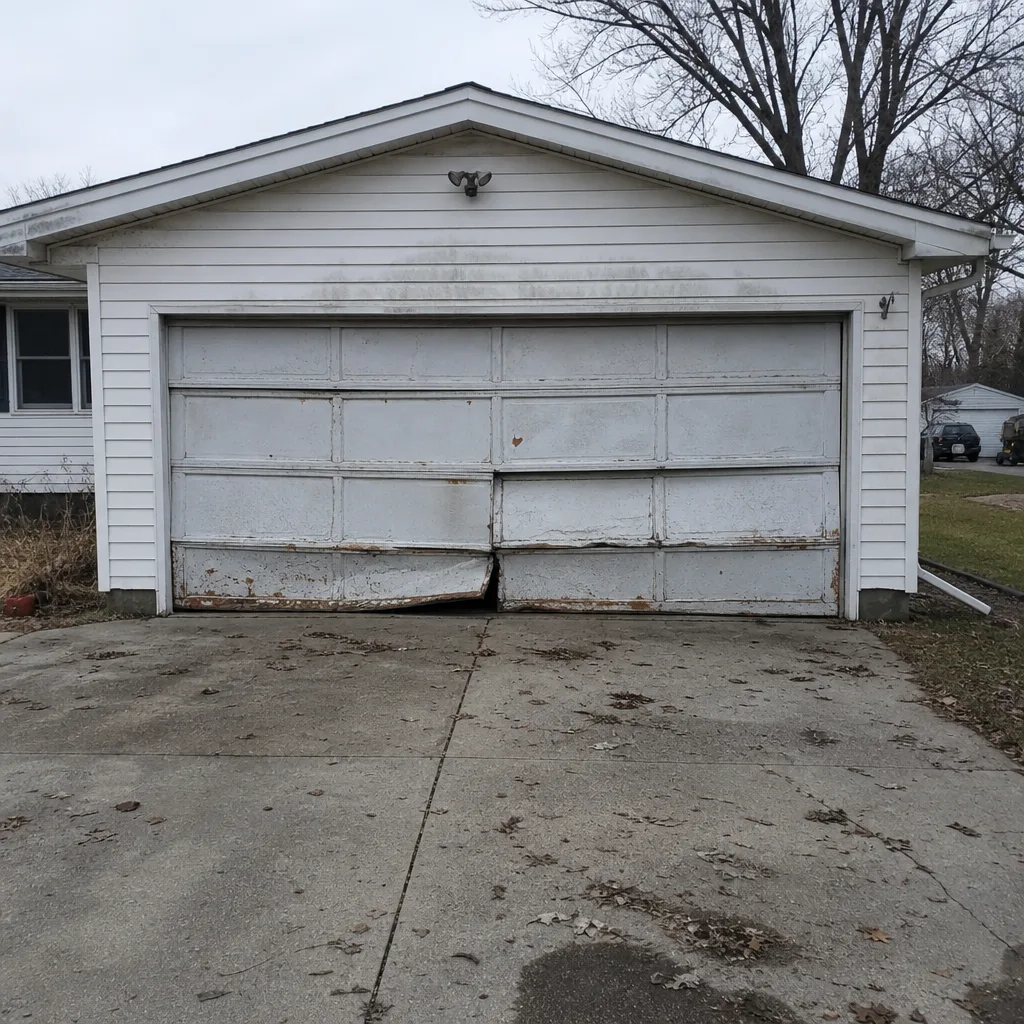 Before
 After